
Organizational Alignment
Integrating People, Processes, & Strategies Across Divisions
Organizations strive to operate efficiently and effectively, yet shifting economic, social, and personal conditions can make this challenging.
Organizational alignment integrates people, processes, and strategies across divisions, so everyone moves toward a shared vision. More than anything, alignment depends on employees clearly understanding their roles, responsibilities, and purpose, enabling them to work cohesively rather than in isolated silos.
With over two decades of leadership experience across nonprofits, government, and higher education, I use tailored processes that help organizations and professionals assess their needs and align strategic goals across systems for long‑term success.
“Dr. Owens is a strategic, mission, and values focused leader. Through collaboration, Megan brings fresh ideas, thoughtful advice, and becomes a partner in your work together. As a small staff professional association CEO, I rely on consultants that not only bring the ideas but are ready to partner with my team to turn our goals into reality in sustainable ways. Dr. Owens has become a trusted consultant, leading initiatives that are both timely and essential to our organization’s future”.
-Colette Marquardt, CEO, American Camp Association, Illinois
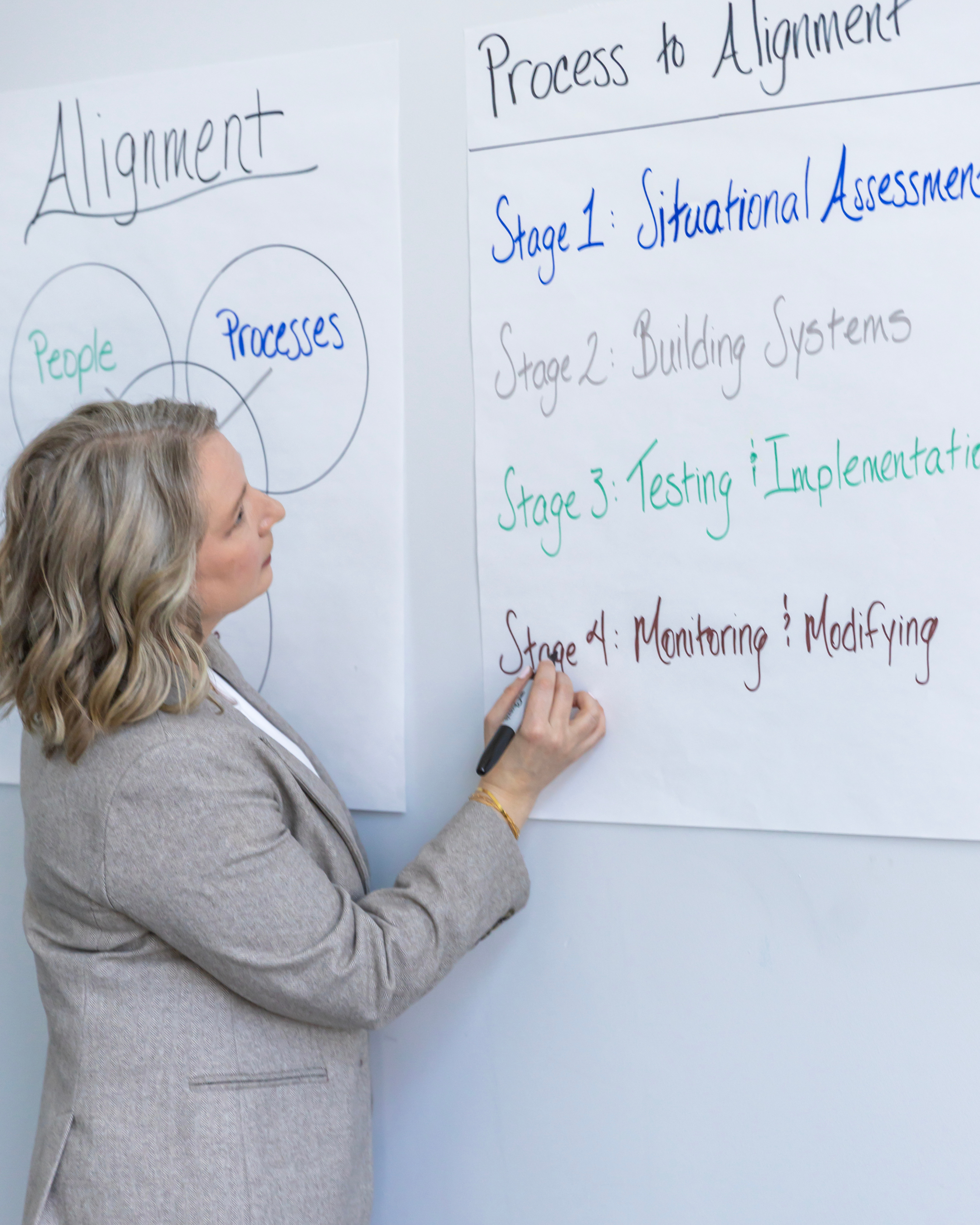
The Process
Client agencies move through a four‑stage process that uncovers core challenges and engages staff in reimagining and redesigning their structures and processes.
Stage 1: Situational Assessment
Every project begins with an internal and external assessment to better understand current operational systems, staff structure and culture, and the outside factors that may influence the organization’s overall functioning.
Stage 2: Building New Structures
A data-informed process to address the alignment challenges identified in stage one. The process to re-envisioning and designing new structures and/or systems involves organizational staff, including leadership.
Stage 3: Implementation & Modification
An implementation plan guides the internal process to the agreed upon changes designed in stage two. Organizational staff and leadership continue their involvement, as they are implementing, evaluating, and modifying the changes with guidance.
Stage 4: Maintenance & Monitoring
Any significant change to processes, structures, and culture takes time; thus, the final stage involves regular monitoring, and adjustment, of the changes implemented over time.

What I Bring to the Table
An approach built from two decades of experiences as a practitioner, educator, researcher, and advisor across the park, recreation, camp, and youth development industries.
A collaborative, values-focused consultant who approaches each client’s needs and goals thoughtfully.
An approach to identifying and addressing core challenges and opportunities occurs through a research-centered approach.
A strategic process of building organizational long-term goals through using practical, manageable, and adaptive steps.
“Working with Dr. Megan Owens with BlueSky Recreation Consulting has been an outstanding experience. Dr. Owens brought a structured, organized approach to every phase of our engagement while remaining approachable and collaborative throughout. What impressed me most was the time she invested in understanding Urbana Park District before engaging with our staff and community. She took the initiative to learn about our organization, projects, and challenges, allowing her to facilitate meaningful conversations and provide informed insight throughout the process. Dr. Owen's expertise in parks and recreation, combined with her knowledge of community engagement and data analysis, made her a valuable resource. She consistently provided thoughtful recommendations, explained the reasoning behind them, and respected our decisions when we chose a different approach. Our work together is still underway, but the process has exceeded my expectations. I would confidently recommend Dr. Owens and BlueSky Recreation Consulting to any organization looking for an experienced, organized, and collaborative consultant.”
-Rachel Lenz, CTRS, CPRP, Executive Director, Urbana Park District